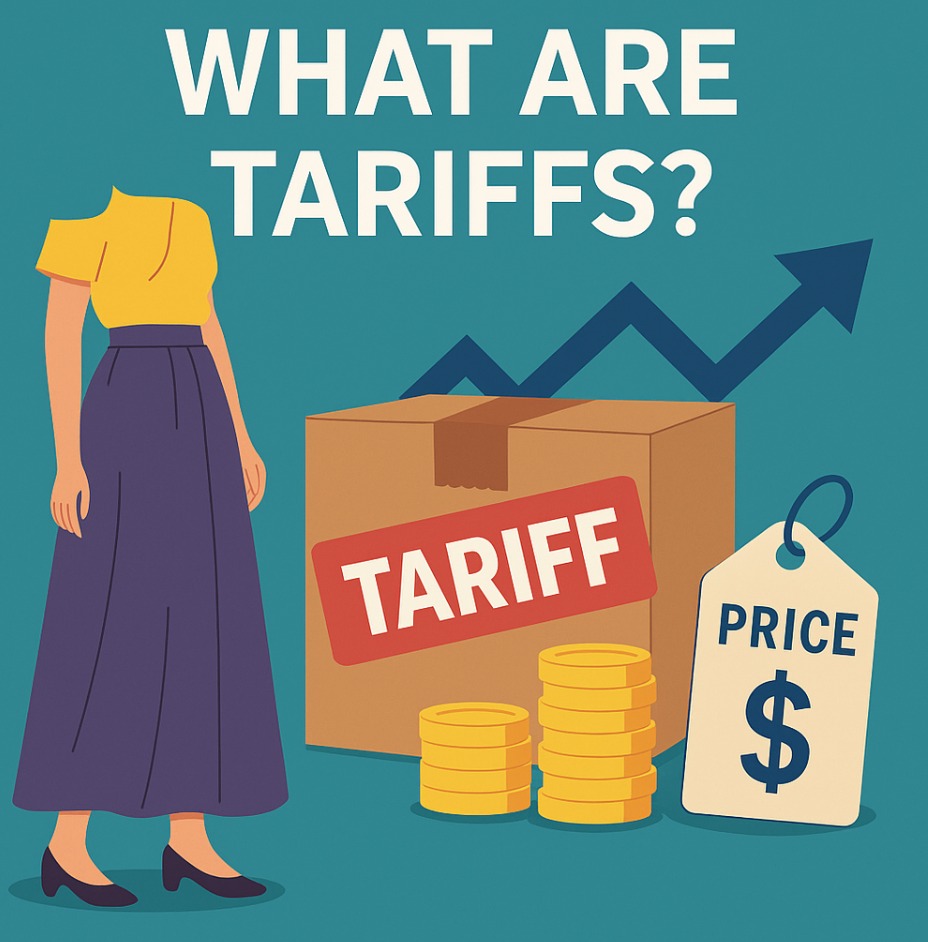
The maxi skirt is back! Although it sounds strange, the rising popularity of the maxi skirt has historically been an indicator of economic downturn — a theory coined the “Hemline Index”. This trending piece of clothing matches current global economic trends, especially in the U.S., raising the question of what's causing this. One big answer: tariffs.
What is a tariff?
Tariffs are taxes placed on imported goods, either as a percentage of the item's total value or a fixed fee per unit, often used as a negotiation tool. Companies importing foreign goods into a country are required to pay this tax to the government.
Depending on the context, tariffs can be used to protect domestic industries, create more revenue for the government, and act as a political negotiation tactic. In recent years the U.S. imposed sweeping tariffs on imports — including very steep tariffs on China, which retaliated with its own tariffs on U.S. products, effectively launching a tariff war between two of the largest economies in the world and sparking worldwide debate.
The case for tariffs
The stated reasoning is reciprocity: for years, other countries taxed American goods, and the tariffs are an attempt to re-establish fairness in the global trading system. By making it harder for American companies to source products and materials from foreign countries, tariffs push them toward sourcing domestically. Since foreign products become more expensive, American-made goods become relatively more affordable, meaning more Americans buy locally made goods. The import tax also goes directly to the government, providing more funding and — in theory — reducing national debt, while pressuring other countries to negotiate trade deals.
The case against
Negative impacts are also very real. Countless American companies — Target, Nike, Apple — outsource materials because foreign sourcing was cheaper than domestic. With tariffs and each country's retaliation, getting materials from abroad becomes a challenge, and companies built on that system lose revenue. Increased prices for imported production materials raise the cost of the products themselves, feeding inflation and making consumers unhappy.
The takeaway
Tariffs are a powerful but blunt instrument: they can protect domestic industry and raise revenue, but they also raise prices, disrupt supply chains, and invite retaliation. Whether the trade-off is worth it is one of the most controversial debates in global economics today.