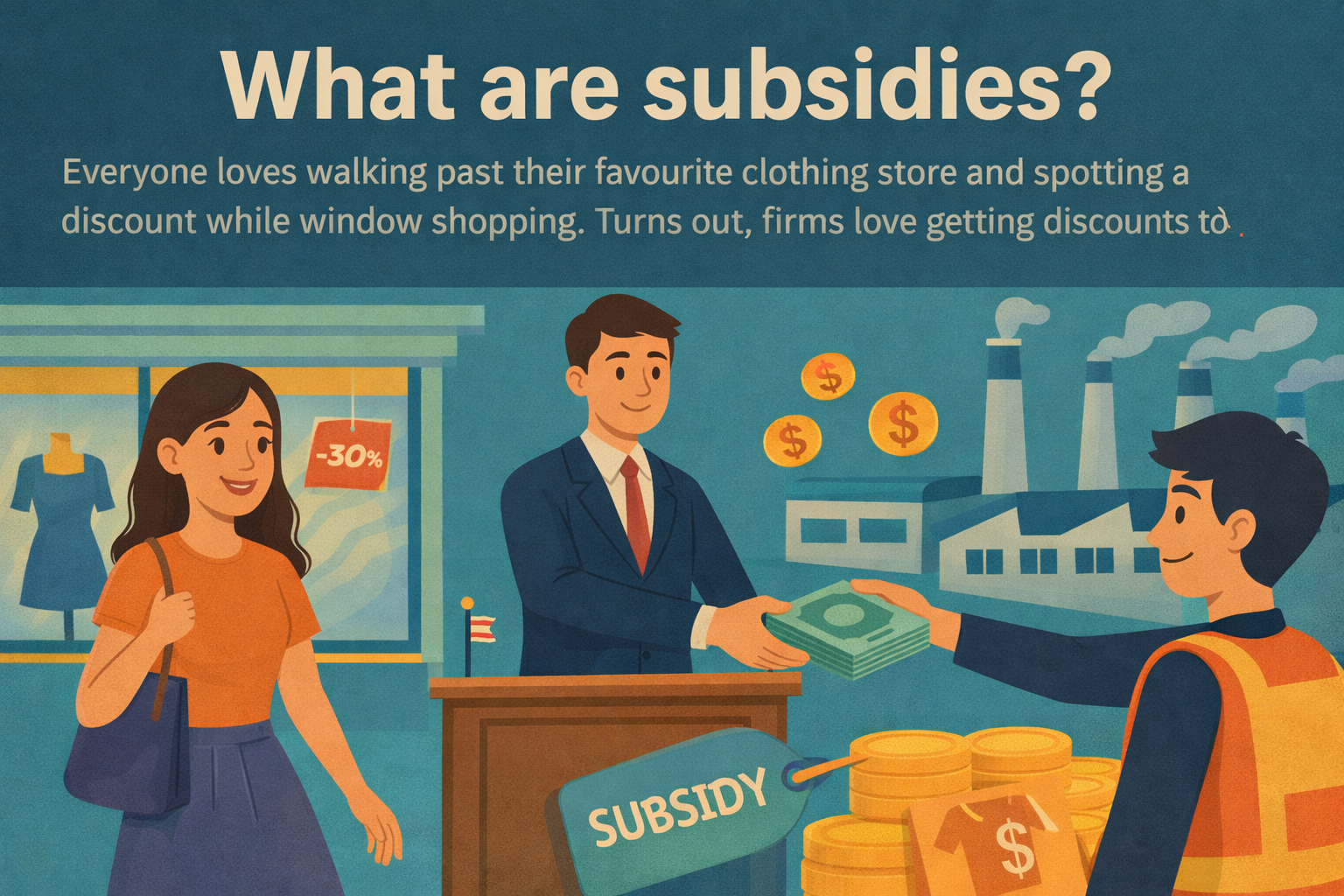
Everyone loves walking past their favourite clothing store and spotting a discount while window shopping. Turns out, firms love getting discounts too!
A discount, but for firms
A subsidy, put simply, is when the government gives a firm or industry money so that goods or services cost less — like a discount, or your parents helping to pay part of your phone bill. Governments grant a sum of money to a firm, lowering its production costs, which results in lower prices for consumers. Generally, governments do this to increase the supply of a product they believe is good for society, ensure the production of a specific product is stable, or encourage consumption.
Who wins, who pays
When the government grants a subsidy, how are stakeholders affected? Consumers benefit from lower prices, meaning they spend less of their real income. Firms benefit from decreased production costs. The government, however, faces a fiscal burden — the strain created by choosing to fund one particular industry — which creates an opportunity cost.
One everyday example is public university education. Many governments subsidize public universities, decreasing tuition to make it affordable while ensuring the university has the funds to keep running.
The takeaway
Subsidies are grants of money that benefit firms and consumers but create a burden on the government. Maybe discounts aren't great for everyone.