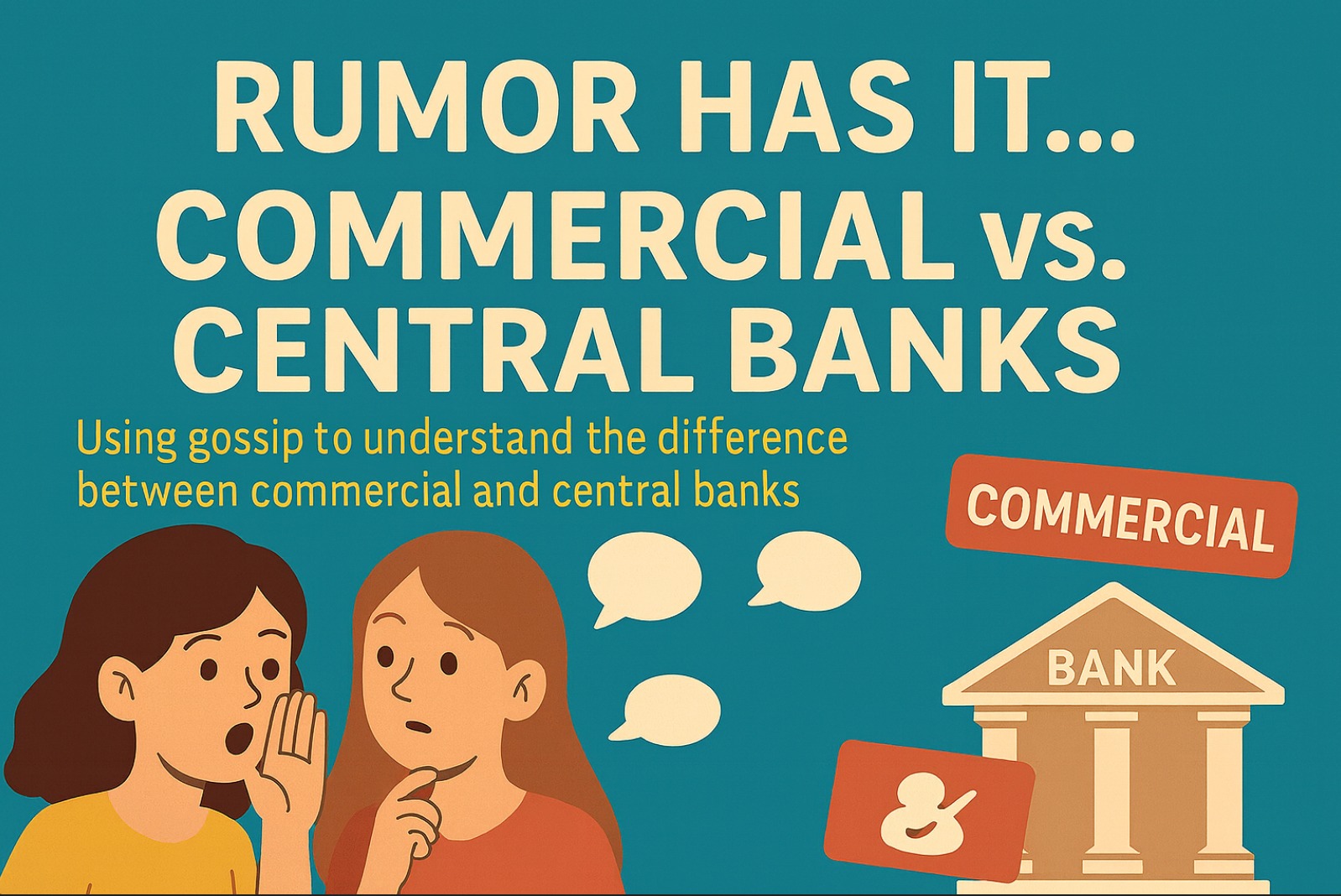
We all know how gossip works at school: one person whispers something, it spreads to another, and before you know it the whole class is talking. That is basically how a commercial bank moves money around — they are the ones passing it person to person. However, every rumor needs someone to step in before it gets out of control. That's the role of the central bank. They don't gossip with you directly, but they set the rules and keep the drama from getting out of hand.
Commercial banks
Commercial banks are the banks we actually deal with every day. They are financial institutions where individuals and firms can save their money or obtain loans. In our rumor analogy, they are like the friends passing the message around. They don't create the money themselves, but they keep it moving between people.
Central banks
Central banks are different because we don't interact with them directly — instead, they act as the authority that keeps the whole system stable. They are the bank of the government, responsible for controlling a country's money supply, issuing notes and coins, and setting the rules that commercial banks must follow. In our rumor analogy, they are the principal or teachers who don't spread the gossip themselves but make sure it doesn't get out of hand. Without them, the “rumor mill” can spill into chaos, with prices shooting up or banks running out of cash.
Why teens should care
Even if you don't think about banks much now, the decisions they make already affect your daily life. When prices rise and your favourite Starbucks order costs more than last year, that is inflation — something central banks try to control. When you save up $100 and put it in the bank, the interest rate decides how much extra you will earn. When you or your family borrow money, like for a car, the bank's lending rates decide how expensive that loan will be. So even if you never step into a bank building, what banks do changes how much things cost and how much money you keep.
Why it all matters
Without central banks, the whole money system could get out of control: prices could skyrocket and banks might run out of cash. On the other hand, without commercial banks, people wouldn't have an easy way to spend, save or borrow money. Both are needed to keep everything running smoothly: commercial banks move money around every day, while central banks make sure the rules are followed and the system stays under control.
Money might seem boring at first, but it's actually full of drama — just like the rumors that fly around school. Commercial banks are the friends passing the money along, letting us spend, save and borrow every day. Central banks are the teachers behind the scenes, setting the rules and making sure nothing spirals. Next time you swipe your card, you'll know there's a whole team working behind the scenes to keep the money gossip under control.