How often do you use generative AI?
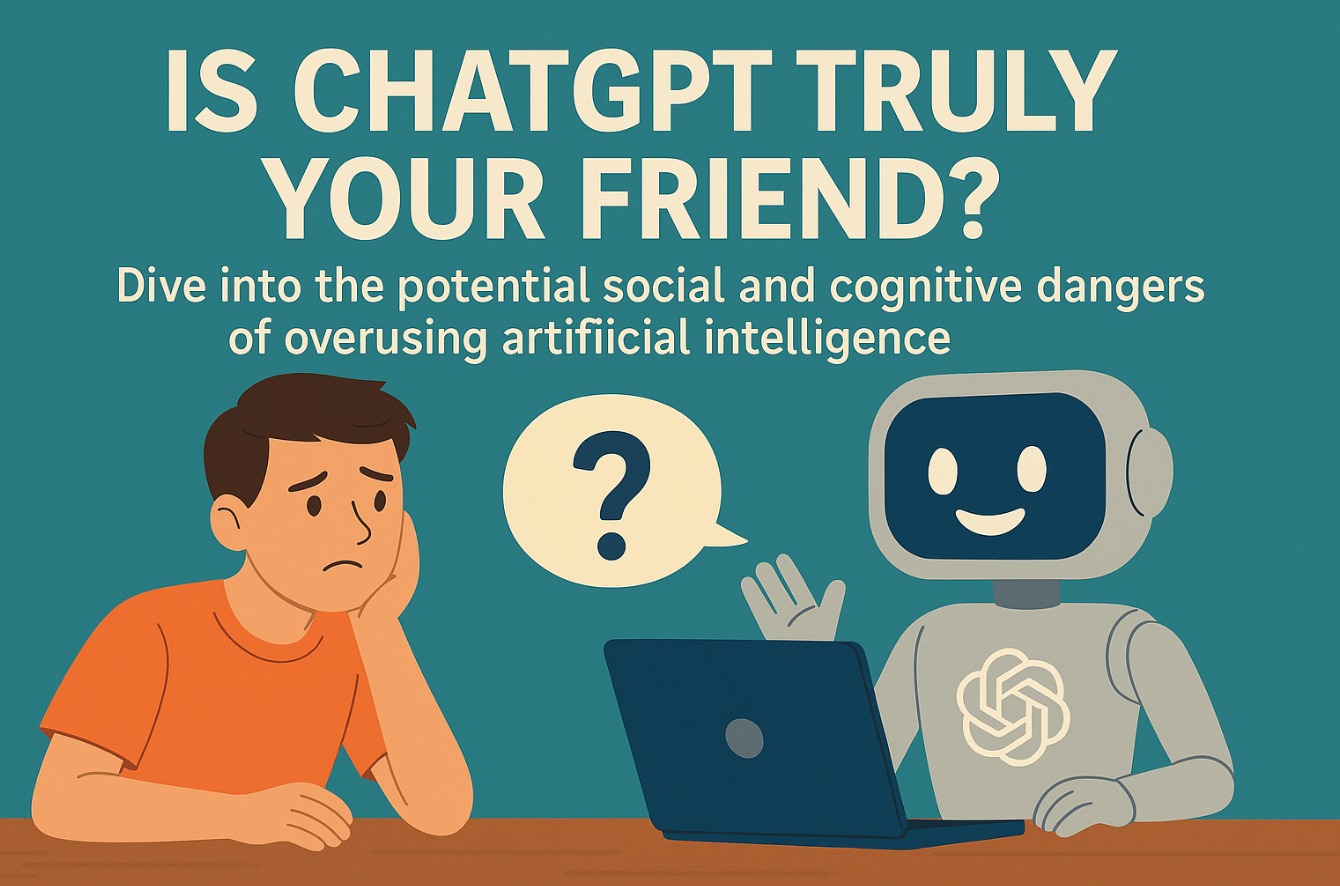
Following the launch of ChatGPT by OpenAI in 2022, the artificial intelligence model spiked in popularity, reaching 100 million users across the globe within just two months. The model can converse and generate responses based on whatever prompt it is given. For students especially, this includes step-by-step solutions to math equations, brainstorming ideas for an upcoming project, or even completing the assignment itself in a short amount of time. Who wants to sit and spend hours writing an essay when ChatGPT can get the work done in a few seconds? Although AI may seem like the solution to all our problems, its rise can pose serious threats to human health and development — especially in adolescents.
The double-edged sword
According to the American Psychological Association, when used in certain ways AI can actually enhance learning — explaining complex topics in detail and summarizing content to make note-taking more efficient. However, over-dependency on AI can result in diminished critical thinking skills, increased risk of academic dishonesty, and glaring concerns over data privacy when people send AI their personal information.
Critical thinking on autopilot
Relying solely on the information provided by AI in response to a single prompt can diminish critical thinking skills. Adolescents in particular use their creative thinking and problem-solving skills less frequently, because it's faster and ultimately easier to ask ChatGPT. In the moment this sounds like the better option; in the long run it becomes tempting to constantly rely on a computer to do the work for you — meaning you get less practice with essential skills.
Furthermore, because training AI models relies on content from across the internet, there is a risk of bias in the responses AI gives. Over-use could cause individuals to unknowingly adopt these biases over time.
Social isolation and emotional detachment
Beyond critical thinking, another concern is over-use causing social isolation and emotional detachment. Dependency on AI responses, tinted by confirmation bias, can become addictive. People may start relying on AI to take on a therapist role in their lives instead of seeking comfort from other humans — raising real concerns around social isolation. AI is incapable of experiencing empathy, so excessive reliance on it can potentially reduce emotional intelligence.
ChatGPT can certainly be used as a tool to save time and work more efficiently — but it's important to consider the downsides and avoid over-usage.