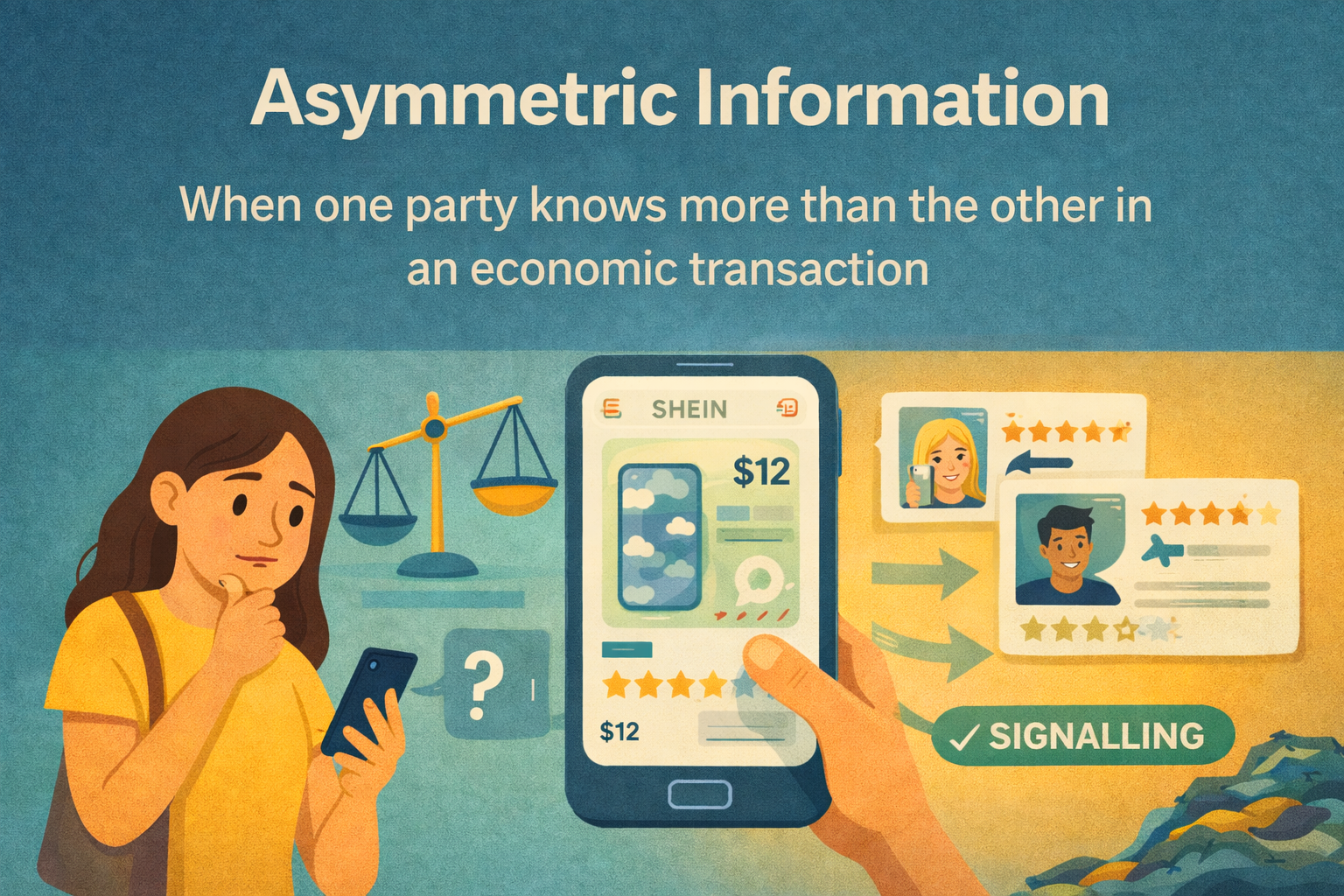
Imagine you're scrolling through Shein or TikTok Shop, and you see a nice phone case you want to buy. In this situation, the seller knows more about the quality of the phone case than you do. The only information you have is from photos the seller chooses to share — which could be misleading. The seller has an advantage over you, creating an imbalance of information. In economic terms, this is called asymmetric information.
An unfair information game
Asymmetric information is when one party has more, or superior, information than the other in an economic transaction. This gives the better-informed party a competitive advantage they can choose to exploit for maximum benefit. Asymmetric information leads to moral hazard and adverse selection — and in both cases, resources end up distributed inefficiently.
Signalling: closing the gap
Back to the phone case: ask yourself, “What would I do?” Most people would start by reading the product reviews to see if the seller is credible and the product is high quality. This is called signalling — relying on reviews from people who already bought the product to decide whether you should. Through this, the buyer bridges the information gap and reduces the imbalance. Lots of positive reviews signal that the phone case is high quality, building trust and making the buyer more likely to purchase.
The takeaway
By using signalling — checking reviews — the information imbalance is reduced, and a few days later you get a new, high-quality phone case!