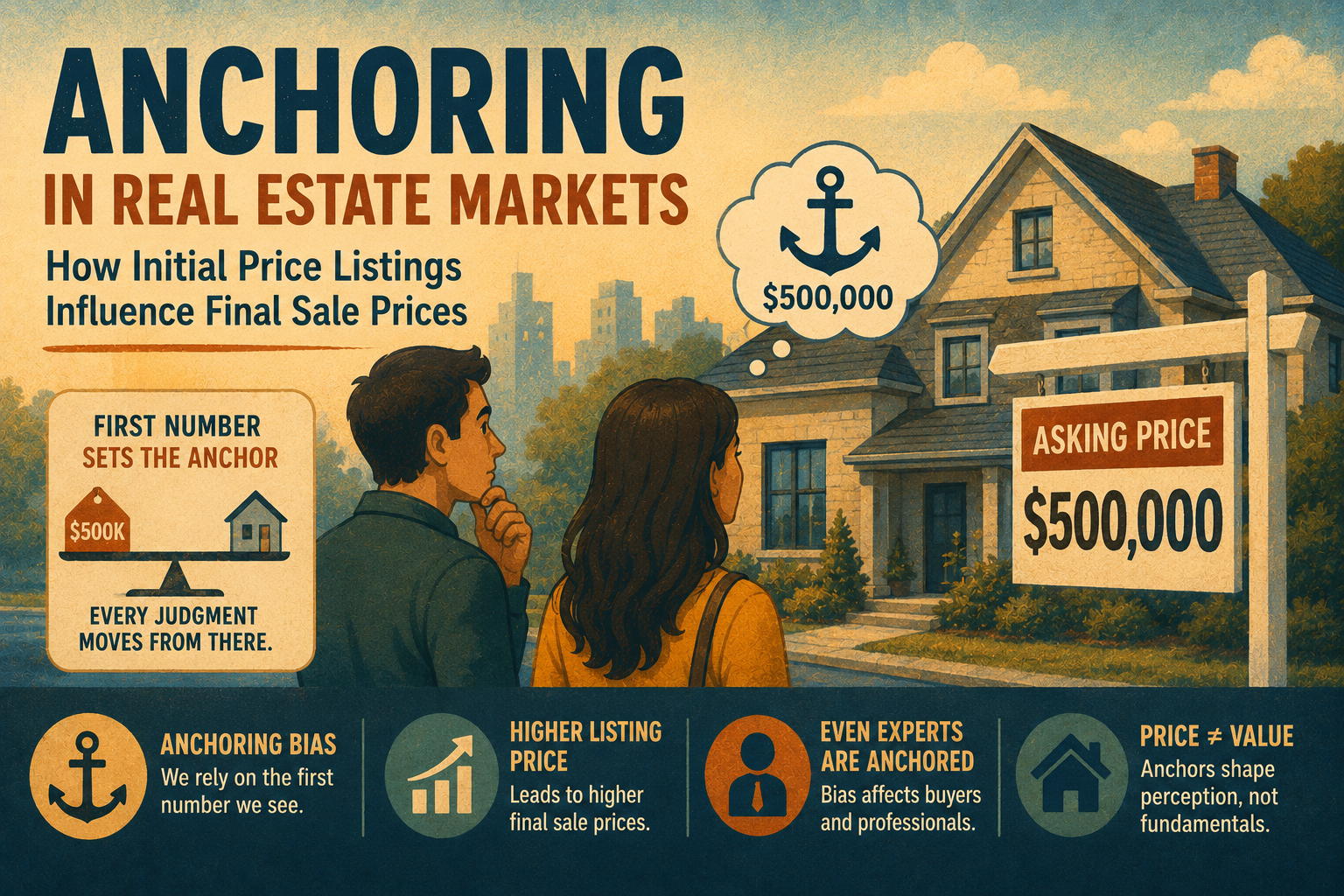
Quick experiment: a house is listed at $500,000. Another identical house next door is listed at $460,000. Which one is “worth more”? If you instinctively felt the first one was, you've just been anchored — and so has almost everyone who will ever tour either home.
The first number wins
Anchoring is the tendency to rely too heavily on the first piece of information we receive when making decisions. In their classic experiments, Kahneman and Tversky showed that even obviously random numbers — like a spin of a wheel — pulled people's later estimates toward them. In real estate, the anchor is rarely random: it's the listing price, and it's chosen deliberately.
Anchors move professionals too
You might expect trained experts to be immune. They aren't. In a famous study, real estate agents were shown the same house with different fake listing prices — and their professional appraisals shifted meaningfully toward whichever anchor they saw, even while most insisted the listing price hadn't influenced them. If the anchor moves the appraiser, it certainly moves the buyer.
This is why overpricing “to leave room for negotiation” often works better than economics says it should. Buyers negotiate down from the anchor, not up from the true value. A high anchor drags the whole negotiation range upward — every counteroffer is framed as a discount from the listed number.
Anchors in a downturn
Anchoring also explains why housing markets are “sticky” on the way down. Sellers anchor on what they paid — or on the peak value their home once had — and refuse to list below it, even when the market has clearly fallen. The result is fewer transactions rather than lower prices: homes sit unsold because sellers are anchored to a number the market no longer supports. Combined with loss aversion (selling below the purchase price feels like a realized loss), this produces the classic pattern of falling volumes before falling prices in real estate downturns.
The takeaway
The listing price is not information about value — it's a negotiation tactic aimed straight at your psychology. Before touring a home, decide what it's worth to you from comparable sales, and write that number down before you see the asking price. The first number you see will try to become your conclusion. Don't let it.